Ben Bolsenbroek
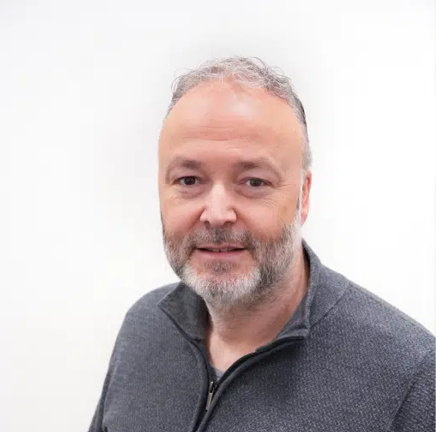
Ben Bolsenbroek, BSc, DC, DACNB, FACNB, FAFNB
Ben Bolsenbroek is a chiropractor, functional neurology clinician and educator whose career has been shaped by a genuine fascination with the nervous system and a deep commitment to patient care.
His interest in neurology has always been driven by curiosity. Why do some patients recover while others continue to struggle? Why can apparently similar injuries result in very different symptoms? And, most importantly, how can a better understanding of neurological function help us provide better care for the individual patient?
After graduating from the Anglo-European College of Chiropractic in the United Kingdom, Ben continued extensive postgraduate education in functional neurology. Over the years, this developed into a particular clinical interest in neurorehabilitation, vestibular and oculomotor function, balance, and persistent symptoms following concussion and mild traumatic brain injury.
He is the founder and clinical director of Amsterdam Brain Center in the Netherlands, where he works alongside a team of clinicians and academically trained technicians in the assessment and rehabilitation of patients with complex neurological presentations.
Alongside his clinical work, Ben is currently pursuing a Master’s degree in Clinical Health Sciences at Utrecht University in the Netherlands. This academic development reflects his continuing interest in connecting clinical experience with research methodology, evidence-based healthcare and the critical evaluation of clinical practice.
Ben has always been an enthusiastic advocate for the development of functional neurology and for bringing detailed neurological examination, objective measurement and individualized rehabilitation together in clinical practice. At the same time, he believes that clinicians should remain curious and critical about their own work: asking questions, measuring outcomes, engaging with scientific literature and being willing to change their thinking as new evidence emerges.
Education and the exchange of knowledge are an important part of that philosophy. Ben enjoys learning from colleagues as much as sharing his own clinical experience and strongly believes that progress in functional neurology depends on collaboration between clinicians, educators and researchers.
His growing involvement in clinical research reflects the same curiosity that originally drew him to neurology. His particular interests include persistent post-concussion symptoms and the interaction between oculomotor, vestibular, sensorimotor and other neurological systems following mild traumatic brain injury.
Despite his enthusiasm for technology, neurological testing and research, Ben’s motivation has remained remarkably simple throughout his career: the patient comes first.
For him, functional neurology is ultimately about listening carefully, remaining curious, trying to understand the individual person behind the symptoms, and using the best available knowledge to help that person move forward.
Clinic Information:
Amsterdam Brain Center
Phone Number: 0031233030380
Website: www.amsterdambraincenter.com
City: Haarlem
State/Province: Noord-Holland
Country: United States
Clinic Summary:
Amsterdam Brain Center
Amsterdam Brain Center (ABC) is a specialized neurorehabilitation clinic in Haarlem, the Netherlands, with a primary clinical focus on persistent symptoms following concussion and mild traumatic brain injury (mTBI), as well as complex vestibular, oculomotor and balance disorders.
Our clinical approach is grounded in functional neurology and contemporary principles of neurorehabilitation. Rather than applying a standardized treatment protocol based solely on a diagnosis or symptom profile, we aim to understand the individual pattern of functional impairment that may be contributing to a patient's persistent symptoms.
Clinical assessment therefore combines a detailed neurological examination with objective functional testing wherever appropriate. Depending on the individual presentation, this may include evaluation of oculomotor function, vestibular function, gaze stability, balance and postural control, sensorimotor integration, autonomic responses, and cognitive or exertional tolerance.
The findings from this examination and testing process are used to develop an individualized rehabilitation program. Progress is evaluated clinically and, where possible, through repeated objective measurements.
ABC has particular experience working with patients who continue to experience symptoms months or years after a concussion. These may include dizziness, imbalance, visual motion sensitivity, headaches, cognitive fatigue, exercise intolerance and difficulty tolerating visually or sensorily complex environments.
The clinic provides both comprehensive neurological and neurofunctional assessments and an intensive neurorehabilitation program. During an intensive program, patients receive multiple individually tailored treatment sessions per day, with interventions adjusted according to clinical response and followed by reassessment and recommendations for continued rehabilitation.
Our Clinical Team
Amsterdam Brain Center is led by Ben Bolsenbroek, DC, DACNB, FACNB, FAFNB, a chiropractor with advanced postgraduate training in functional neurology and extensive experience in the assessment and rehabilitation of patients with complex neurological, vestibular and post-concussion presentations.
The clinical team also includes Jesse Alexander, Irving Fox and Cody Rondeau, who work within ABC's functional neurology and neurorehabilitation program and are actively involved in the examination, treatment and reassessment of patients with persistent post-concussion, vestibular and related neurological symptoms.
The clinicians are supported by Anna Beek and Jill Verhaegen, both Master's-trained professionals working as supporting technicians within the clinic. They contribute to patient assessment and rehabilitation by supporting the administration of neurofunctional testing, objective measurements and rehabilitation procedures under the direction of the clinical team.
This combination of experienced clinicians, academically trained supporting professionals and advanced neurofunctional assessment technology allows ABC to integrate detailed examination, objective measurement, individualized rehabilitation and reassessment within a single clinical setting.
Our Clinical Philosophy
Our objective is not simply to identify a diagnosis, but to understand the individual pattern of functional impairment underlying a patient's presentation.
We therefore combine clinical neurological examination with objective measurements wherever possible and use these findings to guide targeted, progressive and individually dosed rehabilitation.
Amsterdam Brain Center is committed to an evidence-informed approach to clinical practice. The examination methods, rehabilitation principles and neurophysiological concepts used within the clinic are informed by peer-reviewed research in areas including concussion, vestibular rehabilitation, oculomotor function, sensorimotor integration, balance and postural control, autonomic physiology, motor learning and neuroplasticity.
At the same time, we recognize the limitations of the current evidence base. Complex neurorehabilitation is a developing field, and not every assessment method or intervention has the same level of scientific evidence. Treatment response also varies considerably between individuals.
For that reason, critical evaluation is an important part of our clinical philosophy. We believe that clinical reasoning should be informed by scientific evidence, supported by objective measurement where possible and continuously evaluated against the patient's response.
Primary Areas of Clinical Interest
Our principal areas of clinical interest include:
- Persistent post-concussion symptoms (PPCS)
- Concussion and mild traumatic brain injury (mTBI)
- Post-traumatic dizziness and imbalance
- Vestibular and visual-vestibular dysfunction
- Oculomotor dysfunction following concussion
- Visual motion sensitivity
- Balance and postural-control dysfunction
- Exercise intolerance associated with persistent post-concussion symptoms
- Complex multisystem presentations following concussion
Education, Knowledge Development and Research
Beyond patient care, Amsterdam Brain Center is committed to advancing education and knowledge within functional neurology and neurorehabilitation.
We believe that a specialist clinical centre should not only apply existing knowledge, but should also critically examine its own clinical practice, encourage professional development, share knowledge and contribute to the questions that drive future research.
ABC therefore actively encourages continuing professional education in functional neurology and neurorehabilitation and aims to contribute to the development of clinicians and other healthcare professionals with an interest in concussion, vestibular function and neurological rehabilitation.
Where appropriate, the clinic facilitates professional exchange, clinical observation, discussion of complex cases and engagement with emerging scientific developments.
Our ambition is for Amsterdam Brain Center to increasingly function as a centre for clinical expertise, education, knowledge development and research.
We support and encourage interdisciplinary exchange, critical appraisal of scientific literature, systematic evaluation of clinical outcomes, collaboration with clinicians and researchers, and the development and participation in clinically relevant research.
We particularly welcome collaboration with universities, academic institutions, researchers and healthcare professionals who share an interest in concussion, vestibular function, oculomotor control, sensorimotor integration and neurorehabilitation.
Ultimately, we aim to strengthen the connection between clinical practice, education and research: allowing questions arising from patient care to help inform research, scientific developments to improve clinical practice, and knowledge gained from both to be shared with clinicians, researchers and patients.
Through this approach, Amsterdam Brain Center aims to contribute to the responsible development and dissemination of knowledge in functional neurology and neurorehabilitation while remaining open to scientific scrutiny, collaboration and continued learning.